Bariatric nutrition for lifelong health, whatever your path.
Supporting people through bariatric surgery, weight loss medications, and diet & lifestyle modification.
The Eat Bari Well Blog
Beyond the Bariatric Rules: A Food Philosophy for Long-Term Health
Why protein goals and guidelines matter—and why they’re not the whole story.
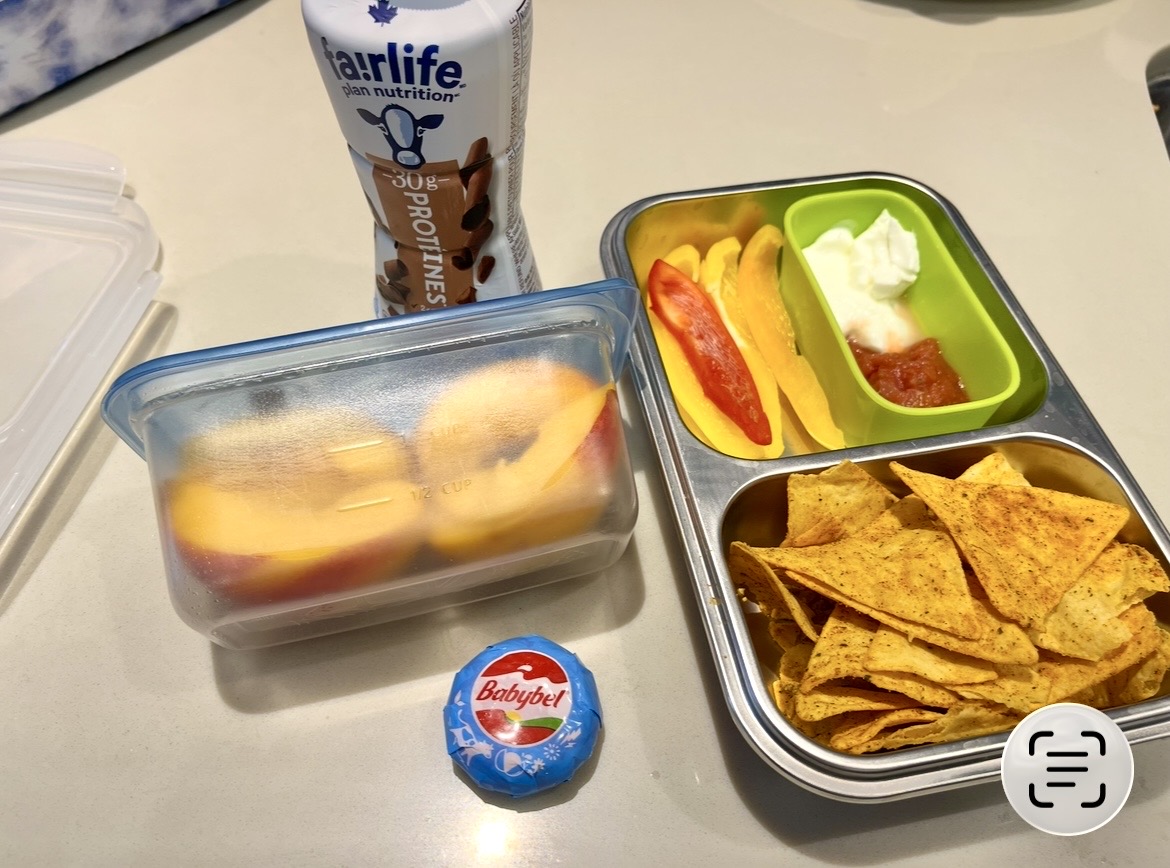
Why posting this photo to a bariatric support group got me cancelled.
This article is specifically about nutrition after bariatric surgery: why the early post-op guidelines matter, and what happens as you move beyond those early stages and begin building a way of eating for the long term.
Guidelines Are Essential (But Not the Whole Story)
If you’ve had bariatric surgery, you were given a set of guidelines: protein targets, fluid goals, sugar limits, timing rules for eating and drinking, portion sizes, and perhaps a list of foods to avoid — at least for now.
Those guidelines matter. In the early months after surgery, they protect you, support healing, reduce risk, and help your body adapt to the profound changes surgery creates. Following them carefully is part of taking care of yourself during the early post-op period.
But those guidelines were never meant to teach you everything you need to know about food.
They focus heavily on mechanics: how much protein, how much water, how much sugar is too much, when to eat, when to stop. They are procedural, protective, and intentionally basic. Early on, basic is exactly what’s needed.
What they don’t teach is how nutrition works as a whole system.
They don’t explain how different foods affect your energy, digestion, or long-term health.
They don’t address what happens when you’re two, five or ten years out, and the rules start to feel less relevant - but you’re not sure what replaces them.
Most importantly, the guidelines don’t always teach you why.
· Why does protein matter beyond preventing hair loss?
· Why do some foods make you feel good while others don’t?
· Why does digestion feel unpredictable?
· Why is it important to increase your calories over time?
· Why can your relationship with food still feel complicated, even when you’re following the rules?
Without that deeper understanding, many people end up stuck.
They try hard to “do it right,” but aren’t always sure what “right” actually means beyond a checklist.
They become rigid, because flexibility feels risky when the principles underneath the rules haven’t been explained.
And fear creeps in—fear of weight regain, fear of eating the wrong thing, fear that they’ve failed yet again.
When something inevitably shifts - a stall, re-gain, a food reaction, a change in routine, or simply life - people often feel confused and lost.
As if they’re supposed to know what to do next, but no one ever taught them.
This isn’t a failure of surgery. It isn’t a failure of your medical team. And it’s certainly not a failure on your part.
It’s simply a gap.
The guidelines do what they were designed to do. But they were never designed to be a complete education in food, nutrition, or long-term health.
They’re a starting point. Not the finish line.
Redefining Success: Weight Loss and Health Are Not the Same Thing
One of the most common beliefs in the bariatric community is that success means losing weight as quickly as possible, eating as little as possible, and hitting your goal weight within the first twelve to eighteen months.
And it makes sense why people believe this. It's what we're often told.
The early months are framed as a window of opportunity - a time when your tool is at its strongest, when weight loss is easiest, when you need to "maximize" results before your body adapts.
There’s urgency baked into the messaging, and with that urgency comes fear. Fear that if you don’t lose fast enough, you’ve wasted your chance. Fear that eating more than the minimum means you’re failing. Fear that your body will stop cooperating and you’ll be left with regret.
That fear is understandable. But it’s also worth examining.
Because weight loss and health are not the same thing.
While maximizing the tool’s effectiveness early on makes sense, eating as little as possible is not the goal.
Bariatric surgery is a powerful treatment tool. It changes anatomy, appetite, fullness signals, and metabolism in ways that can create substantial and durable weight loss. But it does not teach you how to nourish your body, navigate food in real life, or build the knowledge and habits that support your health over the decades that follow.
The surgery is a tool.
It gives you a real biological and physical advantage in a process that is otherwise extraordinarily difficult. Research consistently shows that while lifestyle intervention can produce clinically meaningful weight loss, only a minority of people living with obesity are able to achieve and maintain substantial weight loss over the long term without medical intervention.
But it does not make food decisions for you, teach you why different foods matter, or automatically create a sustainable relationship with eating.
That part is still up to you.
And here's the thing: if your entire focus in the early months is on eating as little as possible and losing as much as possible, you may reach your goal weight. But, you may also arrive there without the skills, understanding, or nutrition foundation you actually need to sustain it.
Long-term success is not just a number on the scale.
It includes how you feel. Whether you have consistent energy throughout the day. Whether your labs show that your body is functioning well: stable blood sugar, healthy iron and B12 levels, strong bones, adequate nutrition. Whether pre-existing conditions have improved or resolved. It includes your mood, your mental clarity, your ability to participate in your life without constant fear or preoccupation with food.
It includes quality of life.
Surgery creates an opportunity, not just to shrink your body, but to rebuild your relationship with food, to shift your priorities, and to develop a way of eating that serves you in the long run. That opportunity doesn't disappear after eighteen months. It doesn't have an expiration date. But it does require intention.
It requires recognizing that health is built through consistency, not urgency. Through learning, not restriction. Through understanding your body as a system, not just a number to be controlled.
None of this means that weight loss doesn't matter. For many people, it's a central reason they chose surgery, and that's completely valid. Losing weight can improve mobility, reduce pain, shift metabolic markers, and change how you move through the world. It's real, and it's meaningful.
But weight loss alone is not enough to carry you through the next twenty, thirty, or forty years of your life.
What carries you is knowledge. Skill. Flexibility. The ability to make decisions that honour both your body's needs and your lived experience. The maturity to recognize that doing things "right" doesn't mean doing them perfectly, and that sustainable health is built over time, not in a race against the clock.
This is what it means to think long-term. Not to dismiss the early months, but to see them for what they are: a beginning, not an end. A time to build, not just to lose.
A Food Philosophy Built on Health, Not Just Weight Loss
The guidelines you were given after surgery are still important.
Protein matters. Hydration matters. Being mindful of sugar and portion size matters - especially in the early stages.
Nothing I’m about to share replaces those foundational principles.
But what I've built my approach on; and what I encourage you to consider, is a broader framework that goes beyond the basics. A way of thinking about food that prioritizes health, sustainability, and how your body functions over the long term.
At the centre of that framework is whole food, Mediterranean-inspired eating.
Not as a rigid diet. Not as a set of rules you either follow perfectly or fail at. But as a pattern: a flexible, evidence-based approach that emphasizes whole foods, nutrient density, and balance.
I've chosen this framework deliberately. For decades, study after study has shown that Mediterranean-style eating is one of the most health-supportive dietary patterns we know. It's associated with longevity, reduced risk of chronic disease, better heart health, improved metabolic markers, and overall wellness. The evidence isn't trendy or new. It's consistent, robust, and built on years of research across diverse populations.
This means:
· centering meals around lean, simply prepared proteins
· prioritizing high-fibre foods like vegetables, fruits, legumes, and whole grains (in amounts that work for a smaller stomach)
· including moderate amounts of healthy fats (olive oil, nuts, seeds, avocado) that support satiety, nutrient absorption, and metabolic health
· choosing foods that are close to their natural form more often, and limiting ultra-processed foods
· including nutrient-dense plant foods: deeply coloured greens, oranges, red/blue/purples rich in antioxidants, vitamins & minerals
It’s not about perfection. It’s not about eliminating entire food groups or obsessing over macros. It’s about building a foundation that supports your body as a whole system.
And after bariatric surgery, that foundation becomes even more important. You’re eating smaller volumes. Your stomach holds less.
Every bite must work harder nutritionally than it did before.
There simply isn’t room to rely heavily on foods that don’t contribute much to your nutritional needs.
That doesn’t mean you can never eat for pleasure.
It means that the majority of what you eat should be doing something meaningful for you: providing protein, fibre, vitamins, minerals, healthy fats, and the building blocks your body needs to function well.
Nutrient density isn’t just a nice idea after surgery. It becomes increasingly important.
This is where a Mediterranean-inspired approach shines.
It’s naturally rich in the things your body needs:
· lean proteins for muscle maintenance and repair
· fibre for digestion and blood sugar stability
· unsaturated fats for heart health and satiety
· and a wide range of micronutrients from colourful, whole foods
It also supports the outcomes that matter most in the long run. Not just weight loss, but health.
Better digestion. More stable energy. Reduced inflammation. Improved metabolic markers like blood sugar, cholesterol, and blood pressure.
And perhaps most importantly, a way of eating that feels sustainable, flexible, and connected to real life.
This is not about restriction. It’s not about eating as little as possible or avoiding fat or carbohydrates out of fear. Protein remains a priority - it’s non-negotiable after surgery - but protein alone is not a complete nutrition strategy.
Your body also needs fibre to keep digestion moving and support blood sugar regulation. It needs healthy fats to absorb fat-soluble vitamins, support hormone production, and help you feel satisfied. It needs a variety of vitamins and minerals that can’t come from protein shakes and chicken breast alone.
A health-first approach recognizes all of this. It sees food not just as fuel, but as nourishment; something that supports energy, mood, immune function, healing, and quality of life.
It’s a shift in focus. Not away from weight loss, but toward the bigger picture.
Toward building a body that feels good, functions well, and is supported by what you eat - not just restricted by it.
This is the philosophy that guides my work. It builds on the bariatric guidelines you were given, but it goes further.
It asks not just: “Am I following the rules?”
But also: “Is this serving my health? Is this sustainable? Does this support the kind of life I want to live?”
Those questions shape everything that comes next.
Protein remains essential, but protein alone is not a complete nutrition strategy
When people think about bariatric surgery, they often focus on the stomach. It's smaller now. It holds less. That's the change.
But the truth is, surgery affects digestion more broadly.
After bariatric surgery, nutrition isn’t only about weight loss or protein targets. Surgery changes the way your digestive system works, and what you eat can have a significant impact on how you feel and function day to day.
Fibre, plant foods, hydration, and dietary variety all play important roles in bowel regularity, gut health, blood sugar regulation, and overall digestive function. Not to mention other systems like cardiovascular health and hormone balance.
This is why I encourage people to gradually move beyond a narrow “protein-first” mindset as they progress after surgery.
The goal is not less food. It’s better nourishment from the food you are able to eat.
That means making room - as your body tolerates them - for vegetables, fruit, legumes, whole grains, healthy fats, and a wider variety of plant foods alongside the protein you need.
Long-term health is not just about what the scale says. It’s also about how your body feels and functions.
Fiber is what keeps your digestive system moving. It adds bulk to stool, feeds the beneficial bacteria in your gut, and supports regularity. But many bariatric patients eat very little of it, especially in the early months and sometimes well beyond.
This isn't anyone's fault. The focus in the beginning is on protein and fluids, and rightly so. Plus, during initial healing, some higher fibre foods can be irritating and are best avoided. But over time, that narrow focus can leave people stuck in a pattern that doesn't serve their digestive health - or their overall health.
The Purpose of Rules - And What Happens When You Outgrow Them
In the beginning, the rules are everything.
Don't drink with meals. Wait thirty minutes before and after eating. Hit your protein goal. Stay under a certain amount of sugar. Avoid carbonation. Eat slowly. Chew thoroughly. Measure your portions.
These rules are not arbitrary. They exist for good reasons. They protect you during a vulnerable time. They reduce the risk of complications, support healing, and give you clear guardrails when everything is new.
When you're fresh out of surgery, you don't yet know what fullness feels like in your new body. You don't know which foods will sit well and which won't. The rules provide structure. They tell you what to do when you're not sure. They keep you safe.
And for many people, that structure is deeply reassuring. It's something to hold onto. A way to feel like you're doing it right, even when so much feels out of your control.
But here's what often happens over time.
The rules that were once protective can start to feel limiting.
The structure that gave you confidence in month two might feel rigid or disconnected from your life in year two. You begin to encounter situations where the rules don't quite fit: social events, travel, changing work schedules, evolving tastes, or simply the reality that your body has adapted and your needs have shifted.
Strict adherence to early post-op rules can also, unintentionally, begin to narrow your nutrition. If the only foods you trust are the ones on your original safe list, you may miss out on some of the nutrients that your body needs long-term.
More than that, rigid rules can start to interfere with learning.
They can create a restriction mindset where food is either "allowed" or "forbidden," where deviating even slightly feels like failure, and where you never develop the ability to make informed, flexible decisions based on context, hunger, your body's signals, and your own understanding of nutrition.
The truth is that rules are meant to support learning - not replace it forever.
Think of them like training wheels on a bike. When you're first learning to ride, training wheels are essential. They keep you upright. They give you stability while you're figuring out balance, steering, and how the whole thing works. You need them.
But at some point, if you want to ride confidently and freely, the training wheels must come off. Not because they were bad or wrong, but because they've done their job. They were never meant to stay on forever.
The same is true for bariatric food rules. They're meant to get you started. To protect you early on. To give you a foundation.
Moving beyond rigid rules doesn't mean abandoning structure. It means learning why the rules exist, understanding the deeper concepts underneath them, and gradually developing the skill and confidence to make decisions that honour both your body's needs and your lived experience. I refer to this as developing a nourishment mindset.
A nourishment mindset recognizes that what you needed at three months post-op and what you need at three years post-op might look different. And that's not failure. It's growth.
For some people, this shift feels natural. For others, it's unsettling. There can be fear in letting go of the certainty that rules provide, even when those rules have started to feel too small. There can be worry that flexibility means losing control, or that adapting your approach somehow means you're "falling off track."
But you're not falling off track. You're learning to ride the bike.
And that learning - the ability to think critically about food, to respond to your body with confidence, and to navigate real life without constant fear or rigidity - is what carries you forward in the long run.
A Story About Rules, Real Life, and What Actually Matters
(aka: How I got FB cancelled for posting a food photo)
About a month after my surgery, I wanted to take my daughter to a local fair.
It was late summer. The kind of day where the sun is bright, the air smells like fried dough and popcorn, and kids are running between game booths and carnival rides. Everywhere you look, there's fast food, funnel cakes, cotton candy - the kind of environment that feels designed to test every food boundary you have.
My daughter was young, excited, and I wanted to be fully present with her (not preoccupied with food stress or sitting on the sidelines because I hadn't planned ahead).
So I did what felt responsible. I packed food for myself.
I was still on a fairly limited diet at that point, carefully following my guidelines and introducing new foods slowly. I brought a protein shake. Some low-fat cheese. A portion of sliced red peppers and a sliced peach - food I'd recently been able to add back in, and was genuinely excited about. Some Greek yoghurt & salsa to dip in. And a serving of protein chips - processed option, yes, but practical at a time when meeting my protein goals and eating enough was still difficult.
It wasn't a “perfect” meal. It wasn't what I would have eaten before surgery. But it worked. It met my nutritional needs. It kept me within my guidelines. And most importantly, it allowed me to participate in something that mattered to me: being with my daughter, enjoying the fair, living my life.
I was proud of myself. Proud that I had planned for it, that I'd prioritized both my health and my family, and found a way to make it work.
So, I shared it in an online bariatric community I'd joined for support. I posted photos of what I'd packed. I wrote about how good it felt to navigate a challenging situation thoughtfully.
The post was removed.
An administrator told me it violated the group's "whole foods only" policy. The protein chips, specifically, were not allowed to be shared or discussed.
I was confused. I was only a month post-op, doing my best to follow my surgical team's guidance while also trying to live my life. The protein chips weren't a staple of my diet. They were a practical tool during a phase when my options were limited, and the situation was outside of the norm. And yet, somehow, sharing that was considered problematic.
What made it even more confusing was the inconsistency. Other posts in the same group celebrated things like protein fluff (whipped mixtures of protein powder and sugar-free pudding mix) that were equally processed, if not more so. But those were acceptable. They fit the narrative.
It wasn't about the food. It was about a version of "right" that was so narrow it left no room for context, real life, or the reality that people are navigating different stages, different challenges, and different circumstances.
I left the group shortly after.
Not out of anger, but out of clarity. That moment showed me something important: rigidity doesn't protect people from failure. But it does create fear. It turns food decisions into moral judgments. It replaces nuance with policing, and support with shame.
And it misses the point entirely.
Because the point of structure, of guidelines, of learning how to eat after surgery? None of that is about achieving some idealized version of perfection, or recreating the restriction mindset of toxic diet culture. It's about building the skills and confidence to make decisions that work for your body, your life, and your long-term health.
It's about developing a nourishment mindset.
Flexibility is not carelessness. It's not "giving up" or "falling off track." Flexibility is what allows you to attend a fair with your daughter without panic. It's what lets you travel, celebrate, navigate busy seasons, and adapt when life doesn't fit neatly into a meal plan.
It's the ability to think critically, make informed choices, and recognize that doing things well doesn't always mean doing them the same way every time.
That day at the fair, I ate food that supported my healing and my goals. I participated in a meaningful experience with my child. I felt capable, not anxious.
And that, to me, is what success actually looks like.
Not rigid adherence to someone else's rules. But skillful adaptation to the life you're living.
What Eating Looks Like in the Long Run
If you’re early in your post-surgical journey, it can be hard to imagine that eating will ever feel normal again.
Right now, it may feel like a job. Something you have to think about constantly, plan meticulously, and execute carefully.
Every bite requires attention. Every meal comes with rules. Drinking water is timed. Protein is tracked. Fullness feels different: confusing, uncomfortable, unfamiliar. Food may not taste the way it used to, and the pleasure it once brought may feel distant or entirely gone.
That phase is real. And it’s hard.
But it’s also temporary.
With time, healing, and practice, eating begins to feel more natural again. Not the same as it was before surgery; your body has changed, and that’s the point, but easier. More natural. Less consuming.
You regain the ability to take a normal bite without overthinking it. You start to enjoy meals again, not just tolerate them. You find yourself at a restaurant, a family gathering, or on vacation, and you realize that you’re participating - not mechanically following rules, but present, and making choices with confidence instead of fear.
You learn what works for your body. You recognize your hunger and fullness signals. You know which foods make you feel good and which ones don’t. Not because someone told you, but because you’ve lived it. You develop a rhythm that fits your life, your needs, and your values.
That’s what long-term success looks like.
Not perfection. Not rigid adherence to a set of rules that no longer fit.
But flexibility within structure. Nourishment without obsession. Enjoyment without panic.
Food is meant to support you.
To fuel your body, yes - but also to be part of your life in a way that feels sustainable, manageable, and even pleasurable. It’s not meant to be a constant source of stress, something you’re always fighting against, or a test you’re either passing or failing.
This philosophy, the one woven throughout this article, is about building a life that includes food, not one controlled by it.
It’s about understanding the principles that support your health deeply enough to apply them with confidence, adapt them when needed, and trust yourself to make decisions that honour both your body and your lived experience.
It takes time to get there. It requires patience with yourself as you learn, heal, and navigate the inevitable challenges that come with change. But you are capable of it.
You don’t have to be perfect. You don’t have to follow every rule flawlessly, forever. You don’t have to live in fear of food, your body, or what might happen if you deviate slightly from the plan you were given in month one.
What you do need is understanding. Compassion for yourself. A willingness to learn. And the recognition that real, sustainable, long-term health is built gradually. Through small, consistent choices that add up over time.
The early months are just the beginning. They’re not the destination. And as hard as it may be to believe right now, there will come a day when eating feels less like work and more like living. When you sit down to a meal without anxiety. When you make a choice and trust it. When you look back and realize how far you’ve come.